
What Documents Are Required for International Government Jobs?
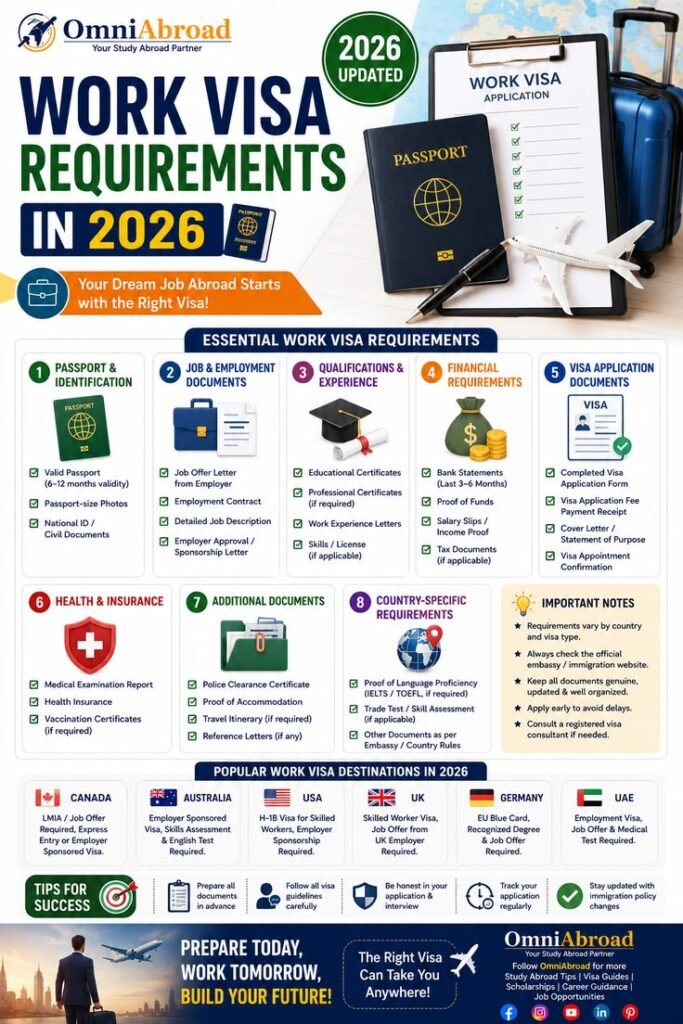
Applying for an international government job can be an exciting opportunity to build a career, gain professional experience, and work in a different country. International government positions are available through foreign ministries, embassies, public institutions, international development agencies, and organizations such as the United Nations and the World Bank.
However, before submitting an application, it is important to prepare the required documents. Employers use these documents to verify your identity, education, professional experience, qualifications, and eligibility for a particular position.
The exact requirements depend on the country, organization, and type of job. Some employers request only a résumé and application form at the beginning, while others may require additional certificates, references, or supporting documents.
Here are the main documents you may need when applying for international government jobs.
1. Updated CV or Résumé
A professional CV or résumé is one of the most important documents for an international government job application. It provides employers with an overview of your education, work experience, professional skills, and achievements.
Your CV should clearly explain why you are qualified for the position. Include your full name, contact information, educational background, employment history, relevant skills, professional training, and certifications.
For international applications, it is important to use a clear and professional format. Avoid unnecessary personal information and focus on qualifications that relate to the advertised position.
You should also adjust your CV to match each job description. For example, an administrative position may require organizational and communication skills, while an international development role may place greater importance on project management, research, or community experience.
2. Valid International Passport
A valid passport may be required when applying for government jobs that involve working abroad or relocating to another country.
Your passport establishes your identity and nationality. It may also be needed during recruitment, background checks, visa processing, and travel arrangements.
Before applying, check that your passport has not expired and that it meets the validity requirements of the destination country. Some employers may request a scanned copy during recruitment, while others may only ask for it after you receive a conditional job offer.
If you do not currently have a passport, consider applying for one early so that it does not delay your application.
3. Educational Certificates
International government employers often require proof of your academic qualifications. These documents help confirm that you meet the educational requirements listed in the job advertisement.
Depending on the position, you may need:
- Secondary school certificates.
- Diploma or professional qualification certificates.
- Bachelor’s degree certificates.
- Master’s degree certificates.
- Doctoral degree certificates.
- Academic transcripts.
For example, an international policy position may require a degree in political science, international relations, economics, or public administration. A healthcare position may require a recognized medical or nursing qualification.
Make sure your certificates are readable and that your name matches the information on your application.
Some employers may also request certified copies or an official evaluation of foreign qualifications. Check the organization’s instructions before paying for certification or evaluation services.
4. Academic Transcripts
Academic transcripts provide a detailed record of the courses you completed and the grades you achieved during your studies.
Some international government employers request transcripts alongside degree certificates to confirm your academic background.
Transcripts may be particularly important for graduate recruitment programmes, research positions, scholarships connected to government institutions, and specialist professional roles.
If your university has an online transcript service, find out how to request an official copy. You should also check whether the employer accepts scanned documents or requires transcripts to be sent directly by your educational institution.
5. Cover Letter
A cover letter introduces you to the employer and explains why you are interested in the position.
It should highlight your most relevant qualifications, experience, and professional strengths. You should also explain how your background matches the responsibilities of the job.
A strong cover letter should be specific to the organization and position. Avoid sending the same general letter to every employer.
For example, if you are applying for a position with an international development agency, you could explain your experience in community development, research, public policy, or project coordination.
Keep the letter professional, organized, and easy to read.
6. Professional References
Some international government employers request references to verify your work history, professional conduct, and qualifications.
References may come from previous employers, supervisors, university lecturers, project managers, or other professional contacts who understand your abilities.
You may be asked to provide:
- Referee names.
- Professional job titles.
- Organization names.
- Email addresses.
- Telephone numbers.
- Your professional relationship with each referee.
Always ask permission before including someone as a reference. Choose people who can provide accurate information about your experience and professional abilities.
Some organizations request reference details during the application process, while others contact referees only after shortlisting candidates.
7. Professional Certificates and Training Records
Professional certificates can strengthen an international government job application, particularly when they demonstrate skills required for the position.
Examples include certificates in:
- Project management.
- Information technology.
- Cybersecurity.
- Accounting and finance.
- Human resource management.
- Public administration.
- Monitoring and evaluation.
- Data analysis.
- International development.
- Language training.
These qualifications may help demonstrate that you have practical knowledge beyond your academic education.
However, only include certificates that are genuine and relevant to the position. Employers may verify professional qualifications before making a final recruitment decision.
8. Language Proficiency Certificates
Some international government positions require applicants to communicate in more than one language.
English may be required for many international roles, while other positions may require French, Spanish, Arabic, Chinese, or another language.
Depending on the employer, you may need to provide evidence of your language ability through recognized examination results or an assessment conducted during recruitment.
For example, some institutions may accept recognized English-language test results, while others assess language skills through interviews or written examinations.
Always check the job advertisement to understand which languages are required and whether formal certificates are necessary.
9. Police Clearance or Criminal Record Certificate
Certain international government positions involve security-sensitive responsibilities, access to confidential information, financial administration, or work with vulnerable communities.
For these roles, employers may request a police clearance certificate or another form of criminal record check.
The document helps the organization assess whether an applicant meets its background-screening requirements.
The process varies between countries. You may need to apply through your national police authority or another authorized government agency.
Do not assume that every international job requires this document at the initial application stage. Some organizations request it only after a candidate has been shortlisted or selected.
10. Medical Certificate
Some employers require medical documentation to confirm that a successful applicant meets the health requirements associated with a particular role or assignment.
This may be relevant for positions involving overseas deployment, fieldwork, remote locations, or specific occupational responsibilities.
A medical certificate may be requested during the final recruitment or onboarding process rather than at the beginning.
Follow the employer’s instructions about approved medical providers, required examinations, and submission deadlines. Avoid arranging unnecessary medical examinations before the organization confirms what it needs.
11. Proof of Previous Employment
Applicants with professional experience may need documents that confirm their previous employment.
These documents can include:
- Employment letters.
- Appointment letters.
- Promotion letters.
- Work experience certificates.
- Contract documents.
- Reference letters.
- Official job descriptions.
They help employers understand your previous responsibilities and determine whether your experience meets the position’s requirements.
If you have worked with government departments, private companies, nonprofit organizations, or international agencies, include relevant experience that demonstrates your ability to perform the advertised role.
Fresh graduates who do not have formal employment history can highlight internships, volunteer activities, academic projects, and relevant practical training where the employer permits them.
12. Visa and Work Authorization Documents
If you are applying for a position in another country, you may eventually need documents related to immigration and work authorization.
Depending on the country and employment arrangement, these may include a passport, visa application forms, photographs, employment offer, sponsorship documents, or other immigration records.
Some international organizations have their own rules concerning staff nationality, appointment categories, and relocation arrangements.
Do not assume that receiving an interview invitation automatically gives you permission to work in another country. Confirm the relevant immigration requirements with the employer and the destination country’s official immigration authority.
How Can You Prepare Your Documents Before Applying?
Preparing your documents early can make the international government job application process easier.
Start by reading the vacancy announcement carefully. Every organization has its own application procedure, and the documents required for one position may differ from another.
Create a digital folder containing your CV, educational certificates, transcripts, professional qualifications, passport information, and employment records. Save clear copies in commonly accepted formats, such as PDF, and use simple file names.
Check that your personal information is consistent across all documents. Differences in names, dates, or qualifications can create problems during verification.
You should also prepare a professional cover letter and contact your referees before submitting their details.
Finally, keep track of application deadlines. Some international government recruitment systems do not accept late applications, even when the applicant has all the required documents.
Important Mistakes to Avoid
One common mistake is submitting an incomplete application. Even qualified candidates may miss opportunities if they fail to provide documents specifically requested in the vacancy announcement.
Other mistakes include using an outdated CV, submitting unclear certificate scans, providing incorrect reference details, and including qualifications that cannot be verified.
Applicants should also be careful about recruitment scams. Genuine employers do not normally require candidates to pay suspicious personal fees to guarantee a job offer. Use official government and organizational recruitment websites, and verify any unusual payment request independently.
Final Thoughts
Applying for international government jobs requires preparation, attention to detail, and the right supporting documents. A professional CV, valid passport, educational certificates, academic transcripts, cover letter, professional references, and relevant training records are among the documents that may be required.
Additional documents, such as police clearance certificates, medical reports, language qualifications, and work authorization records, may be requested depending on the position and employer.
The most important step is to follow the official vacancy announcement. Preparing your documents in advance can help you submit a complete application, avoid unnecessary delays, and present yourself professionally to international employers.




Leave a Reply