

How Can You Apply for Federal Government Jobs?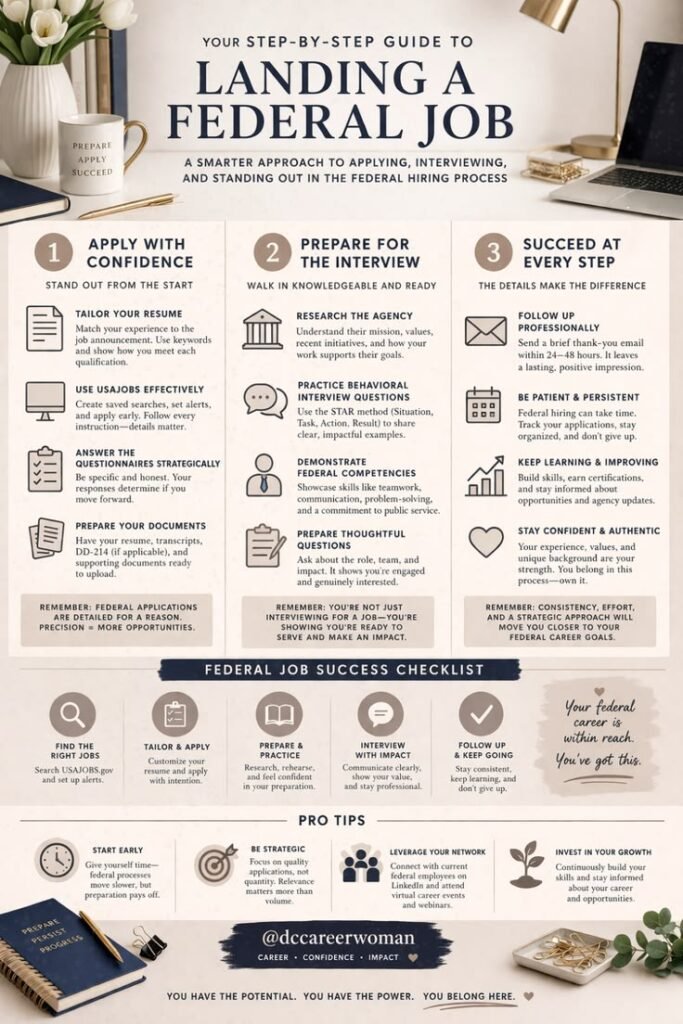
Applying for a federal government job can be an important step toward building a stable and rewarding career. Government departments employ people with different educational backgrounds, professional qualifications, and levels of experience. Whether you are a recent graduate, an experienced professional, or someone looking for an entry-level position, you may find opportunities that match your skills.
However, getting a federal government job requires more than submitting an application. You need to identify suitable vacancies, understand the eligibility criteria, prepare the necessary documents, and follow the recruitment process carefully.
In this guide, you will learn how to apply for federal government jobs, where to find legitimate vacancies, what documents you may need, and how to improve your chances of success.
1. Understand the Types of Federal Government Jobs Available
Before applying, consider the type of work you want to do. Federal governments employ people across numerous departments and agencies, so opportunities are available in many professional fields.
Some common categories include:
Administrative jobs: Administrative officers, clerks, secretaries, office assistants, and human resources personnel help government departments operate efficiently.
Education jobs: Teachers, education officers, researchers, and training specialists may work in public educational institutions or government education departments.
Healthcare jobs: Doctors, nurses, pharmacists, laboratory technicians, public health officers, and other healthcare professionals may find positions in government hospitals and health agencies.
Security and law enforcement: Depending on the country, federal agencies recruit police officers, investigators, immigration officers, correctional personnel, and other security professionals.
Finance and accounting: Accountants, auditors, economists, budget officers, and financial analysts help manage public funds and government financial operations.
Information technology: Software developers, cybersecurity specialists, IT support officers, data analysts, and network administrators support government technology systems.
Engineering and technical services: Civil engineers, electrical engineers, surveyors, technicians, and infrastructure specialists may work on public projects and government facilities.
Identifying your preferred career area helps you focus on vacancies that match your education, experience, and long-term goals.
2. Find Official Federal Government Recruitment Websites
The next step is to find genuine recruitment announcements. Federal government vacancies are usually advertised through official government recruitment portals, individual agency websites, or authorised public service recruitment channels.
The correct website depends on the country where you want to work.
For applicants in Nigeria
If you want to apply for federal government jobs in Nigeria, begin with the official Federal Civil Service Commission recruitment portal. You can also check the websites of individual federal ministries, departments, and agencies for recruitment announcements.
Some agencies conduct their own recruitment exercises, which means their vacancies may be published separately from general civil service opportunities.
Always confirm that a recruitment exercise is open before submitting an application. A website may remain accessible even when a particular recruitment exercise has closed.
For applicants in the United States
People seeking U.S. federal government employment can search for vacancies through USAJOBS, the official federal government employment website.
Applicants can search by job title, agency, location, salary range, and other filters. Each vacancy announcement explains the position’s requirements, eligibility rules, application documents, and deadline.
For other countries
If you live in another country, visit the official website of its public service commission, civil service department, or federal government employment agency.
Avoid relying exclusively on unofficial job blogs, social media posts, or messages forwarded through WhatsApp. These sources may share useful information, but you should verify every vacancy through an official channel.
3. Check the Eligibility Requirements
Before applying for a position, read the vacancy announcement carefully. Every job has specific requirements, and meeting them is essential for your application to be considered.
Common requirements may include:
- Citizenship or legal eligibility to work in the country.
- A minimum educational qualification.
- Relevant professional qualifications or licences.
- Work experience, where required.
- A minimum or maximum age, if specified by the recruitment rules.
- Language proficiency.
- Medical fitness or security clearance for certain roles.
- Additional documents requested by the recruiting agency.
For example, an entry-level administrative position may require a secondary school certificate or diploma, depending on the country and job grade. An engineering position may require a relevant university degree and professional registration.
In Nigeria, some vacancies may also require an NYSC discharge, exemption, or exclusion certificate, depending on the stated requirements.
Do not assume that all federal government jobs have the same qualifications. Always follow the requirements listed for the specific vacancy.
4. Prepare the Required Documents
Preparing your documents before beginning the application can make the process easier and reduce the risk of missing important information.
Depending on the position and country, you may need:
- A valid means of identification.
- Educational certificates and academic transcripts.
- A professional CV or résumé.
- A cover letter, where requested.
- Recent passport photographs, if required.
- Evidence of relevant work experience.
- Professional certificates or licences.
- NYSC documentation, where applicable in Nigeria.
- References or other supporting documents requested in the announcement.
Ensure that your name, dates, qualifications, and other details are consistent across your documents.
If the application requires scanned documents, make sure they are clear and readable. Use the file formats and size limits specified by the recruitment portal.
Never submit false certificates or inaccurate information. Incorrect details may lead to disqualification, even if you otherwise meet the requirements.
5. Complete the Online Application Form
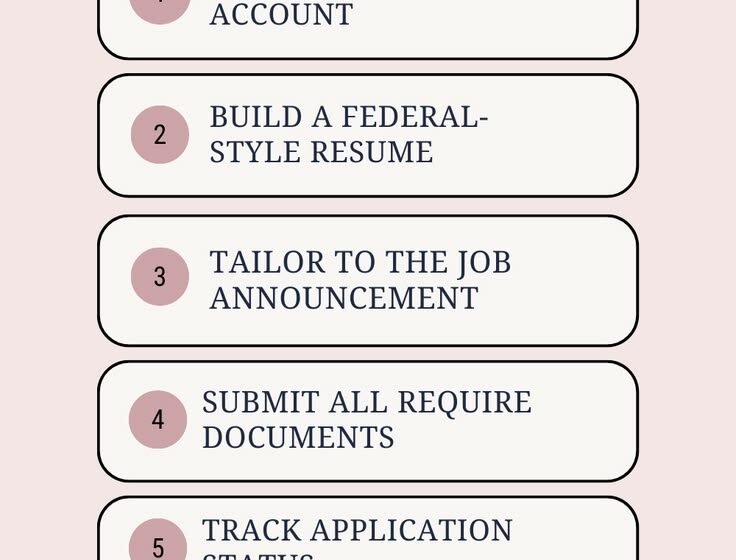
Many federal recruitment exercises use online application systems. Once you have identified a suitable vacancy and gathered your documents, follow the instructions on the official recruitment website.
The process commonly involves creating an account, entering your personal details, providing educational information, listing your work experience, and uploading supporting documents.
Take your time when completing each section. Small errors in names, contact details, examination results, or employment dates can cause unnecessary problems.
If a recruitment form asks you to select a position or department, ensure that your choice matches the vacancy you intend to apply for.
Before submitting the form, review every section carefully. Confirm that all mandatory fields are complete and that your uploaded documents are correct.
For U.S. federal vacancies advertised through USAJOBS, applicants are instructed to review the announcement, select the relevant résumé and documents, and complete any additional steps required by the hiring agency.
6. Submit Your Application Before the Deadline
Every recruitment exercise has its own application schedule. Some vacancies remain open for several weeks, while others accept applications for a shorter period.
Check the opening and closing dates before starting your application. If the portal specifies a deadline and time zone, make sure you understand when applications will stop being accepted.
Do not wait until the final minutes to submit your form. Internet problems, missing documents, or website delays could prevent you from completing the process.
After submitting your application, save any confirmation message, reference number, or acknowledgement slip provided by the portal. You may need this information to check your application status later.
If you are unsure whether your application was submitted successfully, check your account or contact the recruiting agency using the official contact details.
7. Prepare for Recruitment Tests and Interviews
Submitting an application is only one stage of the recruitment process. Depending on the agency and position, shortlisted candidates may be invited to complete an aptitude test, professional assessment, interview, medical examination, or background check.
Preparation should reflect the specific job you applied for.
For general administrative positions, you may benefit from practising numerical reasoning, verbal reasoning, basic computer skills, and written communication.
For professional positions, revise the technical knowledge associated with your field. Applicants for accounting, engineering, healthcare, and IT roles may be assessed on relevant professional skills.
If you are invited to an interview, review the job description and prepare to explain how your education, experience, and abilities relate to the position.
Follow all instructions regarding examination dates, interview locations, identification documents, and required materials.
Remember that recruitment procedures differ between agencies. Only prepare for tests or assessments confirmed by the official recruitment announcement or a verified communication from the agency.
8. Avoid Federal Government Recruitment Scams
Job seekers should be careful when dealing with people who claim they can guarantee a government appointment.
Fraudsters sometimes create fake recruitment websites, impersonate government officials, or request money in exchange for application forms, shortlisting, examination results, or employment offers.
Protect yourself by following these precautions:
- Apply through official government recruitment portals.
- Verify announcements on the recruiting agency’s website.
- Be cautious of unofficial requests for payment.
- Never share passwords or banking PINs with recruiters.
- Do not trust promises of guaranteed employment.
- Verify unexpected recruitment messages before responding.
A legitimate-looking website or government logo does not automatically prove that an announcement is genuine.
If you are asked to pay a fee, independently confirm whether it is officially required before making any payment. Never pay an individual who promises to secure a government job through personal connections.
9. Follow Up on Your Application
After submitting your application, monitor the official recruitment portal and the email address or phone number you provided.
Recruitment agencies may publish shortlisted candidates, examination schedules, interview instructions, or other updates through their official channels.
Keep your application reference number and other relevant records in a safe place.
If the agency provides an application-status feature, use it to check for updates. If you need clarification, contact the agency through the official contact information provided in the vacancy announcement.
Government recruitment can take time, so avoid assuming that a delay automatically means your application has been rejected.
You can also continue applying for other suitable vacancies while waiting for a response.
Conclusion
Applying for federal government jobs becomes easier when you understand the recruitment process and prepare in advance. Start by identifying the type of position you want, searching official government websites, and checking whether you meet the eligibility requirements.
Prepare your documents carefully, complete the application form accurately, submit it before the deadline, and follow the official instructions for any subsequent tests or interviews.
Most importantly, verify every recruitment announcement and protect yourself from employment scams.
With careful preparation and consistent attention to official vacancies, you can improve your chances of finding a federal government position that matches your qualifications and career goals.



Leave a Reply